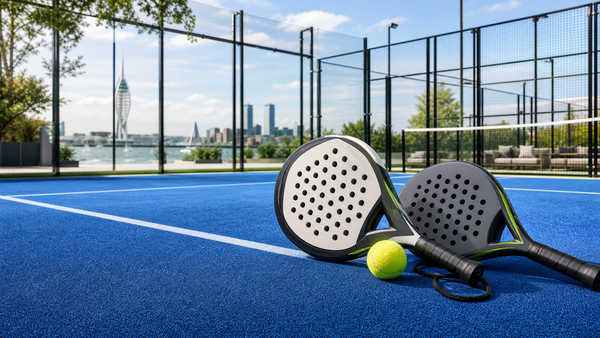
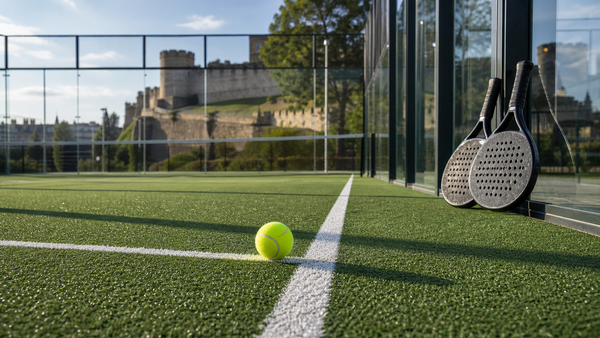
Padel courts use glass because the walls are part of the game, and glass gives players a visible, consistent rebound surface. The glass is not decoration. It is one of the reasons padel feels different from tennis, squash and every “I’ll just wing it” racket session.
Last updated: 24 June 2026. Wall, court and construction details were checked against the International Padel Federation rules documents and LTA padel construction guidance. Venue specifications vary, so use official guidance for construction or competition decisions.
Quick answer
Glass walls help padel in 4 main ways:
- they let the ball rebound as part of normal play;
- they keep the court enclosed without blocking visibility;
- they help spectators, coaches and players see the game clearly;
- they create the tactical wall rebounds that make padel feel like padel.
Are the glass walls actually in play?
Yes. Once the ball has bounced correctly inside the court, it can rebound off the glass and still be played. That is the bit new players often forget.
In tennis, a ball past you is usually gone. In padel, a ball past you may be an invitation to turn, wait and play it after the glass. Sometimes it is also an invitation to panic. The better option is the first one.
Why glass instead of a solid wall?
Official and construction guidance allows rebound surfaces, but glass is popular because it gives a clean view and a reliable bounce when properly installed. Players can track the ball, coaches can watch technique and spectators can see the rally from outside the court.
A solid wall can work as a rebound surface, but it blocks visibility. Mesh has a different, less predictable rebound. Glass gives padel its familiar modern look and makes indoor and outdoor courts easier to watch.
What kind of glass is used?
Padel court glass is not normal window glass. LTA construction guidance refers to toughened glass, with outdoor courts commonly using thicker glass than indoor courts. The point is strength, visibility and a rebound surface that behaves consistently.
Players do not need to memorise glass thickness before booking. The useful beginner point is simpler: the glass is designed as part of the court, not an accidental obstacle.
How do the walls change the game?
The walls make padel more forgiving and more tactical.
- Defence lasts longer: you can let some balls pass and play them after the rebound.
- Lobs matter: a good lob can push opponents back and reset the point.
- Patience matters: smashing every ball is not the answer. Sadly, it rarely is.
- Positioning matters: you need to know when to move forward and when to wait.
- Corners are difficult: glass and mesh rebounds can create awkward angles.
Can the ball hit the glass before the floor?
Not as a normal legal shot onto your opponent’s side. The ball has to land in the opponent’s court first. After that, it can hit the glass or mesh and stay in play depending on the situation.
On your own side, you can use the back glass after the ball has bounced on your court. Learning that timing is one of the biggest early improvements for new players.
What is the difference between glass and mesh?
Glass gives a cleaner, more predictable rebound. Mesh can slow, grip or change the rebound more awkwardly. That is why corner balls can feel messy. They may involve both glass and mesh, and the bounce can be less kind than the coaching video promised.
For beginners, the practical rule is to watch the ball, leave more space than you think and avoid rushing the swing after the rebound.
Are glass padel courts safe?
Proper padel courts are designed for the sport, with specialist glass, structure and installation standards. That said, players still need common sense. Do not sprint blindly into the wall, and give yourself space when defending deep balls.
If a court looks damaged, panels are loose or the surface feels unsafe, stop and speak to the venue. No point is worth testing the engineering.
Beginner tips for using the glass
- Let the ball come to you: not every deep ball needs an immediate swing.
- Turn early: open your shoulders so you can see the rebound.
- Keep the swing short: wall shots reward control, not drama.
- Practise the back glass first: side-wall rebounds are trickier.
- Use lobs: they buy time and move opponents away from the net.
What should you check when booking?
For a first session, check whether the court is indoor or outdoor, whether rackets are available, whether balls are included and whether the session suits beginners. If you are sorting kit, start with padel rackets and padel accessories.
For more court context, read how big a padel court is and whether you can play singles padel.
FAQs
Why do padel courts have glass walls?
Glass walls give a visible rebound surface that is part of the game. They let players and spectators see clearly while keeping the ball playable after a legal bounce.
Are padel walls part of the rules?
Yes. The walls are part of padel play after the ball has bounced correctly in the court.
Can you hit the ball after it touches the glass?
Yes, on your side, if the ball has bounced correctly first. This is one of the main skills new players learn.
Is padel glass normal glass?
No. Padel courts use specialist toughened glass designed for sports-court use and installed as part of the court structure.
Why not use mesh for every wall?
Mesh can create a less predictable rebound and blocks more of the view. Glass gives clearer visibility and a cleaner bounce.
Do beginners need to learn wall shots?
Yes. You can enjoy a first session without mastering them, but learning to use the glass is essential if you want to improve.