Last updated: 24 June 2026. Source check: Cambridge Dictionary, Merriam-Webster, LTA history of padel and FIP history.
Quick answer: padel is usually pronounced “PAD-uhl” in British English, very close to “paddle”. It is not normally pronounced “pay-del”. Some speakers use a clearer Spanish-style “pa-del”, but if you say “PAD-uhl” in a UK club, people will understand you.
If you have only seen the word written down, padel can look slightly confusing. Is it “pay-del”? “pah-del”? Is it just “paddle” with fewer letters?
The good news is that you are not the only one wondering. The sport has Spanish-speaking roots, an English audience and a spelling that looks familiar but not quite familiar enough.
How do you pronounce padel?
The easiest UK pronunciation is:
PAD-uhl
That is close to paddle. The first syllable is short, like “pad”, not long like “paid”. Cambridge Dictionary gives British and American audio for padel, while Merriam-Webster lists pronunciations including a first-syllable stress. In plain English, “PAD-uhl” is the safe everyday version.
- Best UK everyday pronunciation: PAD-uhl
- Also understandable: pa-del, with a clearer second syllable
- Usually wrong: pay-del
- Different thing: paddle tennis
Is padel pronounced like paddle?
Yes, in everyday British English, padel is pronounced very close to paddle.
The difference is mostly spelling and context rather than a dramatic difference in sound. If you say “padel” like “paddle”, most UK players will know exactly what you mean.
That said, padel is its own sport. It is not just a different spelling of paddle tennis, and it is not the same thing as pickleball.
Why is it spelt padel?
The spelling reflects the sport's Spanish-speaking route into modern sport.
The LTA's history of padel notes that Spain recognised the sport in the early 1990s and changed the spelling from paddle to padel for pronunciation purposes in Spanish. FIP traces the sport back to Enrique Corcuera's first court in Acapulco, Mexico, in 1969.
That is why the word can feel a bit odd in English. It looks like it should be “paddle”, but the sport's international identity settled around “padel”.
Do Spanish speakers pronounce it differently?
Often, yes. Spanish speakers may pronounce it with a clearer second syllable, closer to “pa-del”. In English, especially in Britain, the ending is usually softer, so it lands closer to “paddle”.
Neither version is going to cause a scandal at your local court. Unless you call it pickleball. Then someone may gently correct you.
Is padel the same as paddle tennis?
No. Padel and paddle tennis sit in the broad racket-sport family, but they are not the same sport.
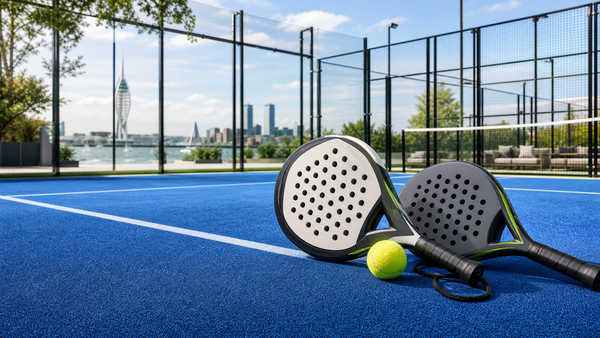
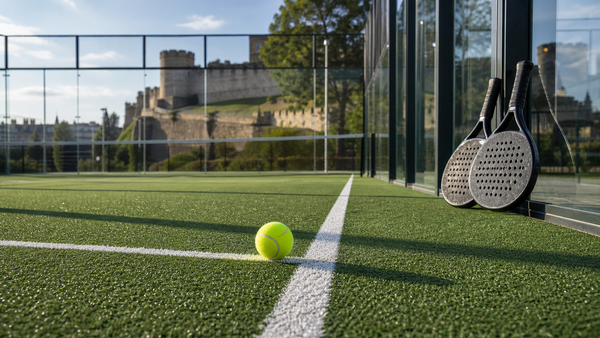
Modern padel is usually played as doubles on an enclosed court with glass and mesh walls. The walls are part of the game, which is one of the biggest things that makes padel different from tennis and other racket sports.
If you are new to the sport, start with our guide to what padel is and why it is so popular.
Common pronunciation mistakes
| Pronunciation | Verdict | Why |
|---|---|---|
| PAD-uhl | Best everyday UK pronunciation | Close to paddle and widely understood |
| Pa-del | Also fine | Closer to a clearer Spanish-style sound |
| Pay-del | Usually wrong | The first syllable should not sound like “paid” |
| Paddle tennis | Different sport or name | Padel is its own sport with enclosed courts and walls |
Why does pronunciation matter?
Honestly, it does not matter that much. If you are booking a court, watching highlights or chatting with friends, nobody sensible is going to stop the conversation because your vowel sound was not perfect.
But getting it right helps you sound more confident, especially if you are new to the sport and trying to work out the basics.
It also helps avoid confusion with paddle tennis, pickleball or paddleboarding. Different sports. Different gear. Different levels of explaining yourself at reception.
So, what should you say?
Say PAD-uhl.
That is the simplest UK-friendly pronunciation and the one most beginners will hear around clubs and courts. If you want to be slightly closer to the Spanish sound, say pa-del with a clearer second syllable.
Just do not overthink it. The bigger challenge is not saying the word. It is dealing with your first ball off the back glass.
Final thoughts
Padel is pronounced PAD-uhl, very close to paddle. In the UK, that is the safest and most natural way to say it.
It is not usually “pay-del”, and it is not quite the same as paddle tennis. Once you know that, you are already one step ahead of plenty of first-timers.
New to the sport? Read is padel easy to learn?, or compare the sport properly in how padel is different from tennis.
FAQs
How is padel pronounced?
Padel is usually pronounced “PAD-uhl” in British English, very close to “paddle”.
Is padel pronounced pay-del?
No, padel is not usually pronounced “pay-del”. The first syllable should sound like “pad”, not “paid”.
Is padel pronounced like paddle?
Yes, in everyday UK English, padel sounds very close to paddle.
Why is padel spelt that way?
The spelling reflects the sport's Spanish-speaking history. Spain recognised the sport under the padel spelling in the early 1990s.
Is padel the same as paddle tennis?
No. Padel is usually played as doubles on an enclosed court with glass walls. Paddle tennis can refer to different racket-sport formats.
Where did padel come from?
FIP traces padel back to Enrique Corcuera's court in Acapulco, Mexico, in 1969. The sport later grew strongly in Spain and Argentina.