Padel and tennis look similar at first glance. Both involve a net, rackets, a ball and familiar scoring. But once you step onto court, the two sports feel very different.
Padel is played on a smaller enclosed court, usually as doubles, with glass walls that are part of the game. Tennis is played on a larger open court, with more emphasis on serve speed, baseline power and individual shot-making.
Quick answer: padel is different from tennis because it uses a smaller enclosed court, solid rackets, an underarm serve and walls that keep the ball in play. Tennis is faster, more open and more serve-led, while padel is more social, tactical and easier for most beginners to pick up.
Padel vs tennis at a glance
| Feature | Padel | Tennis |
|---|---|---|
| Court | Smaller enclosed court with glass and mesh walls | Larger open court with boundary lines |
| Walls | Walls are part of the game | Walls are not used |
| Format | Usually played as doubles | Singles and doubles are both common |
| Serve | Underarm serve after a bounce | Overarm serve |
| Racket | Solid perforated racket with no strings | Strung racket |
| Scoring | Mostly the same as tennis | Traditional tennis scoring |
| Beginner appeal | Easier to start rallying quickly | More technically demanding at first |
1. The padel court is smaller and enclosed
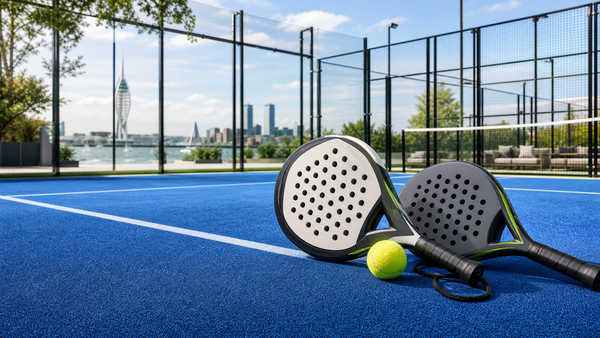
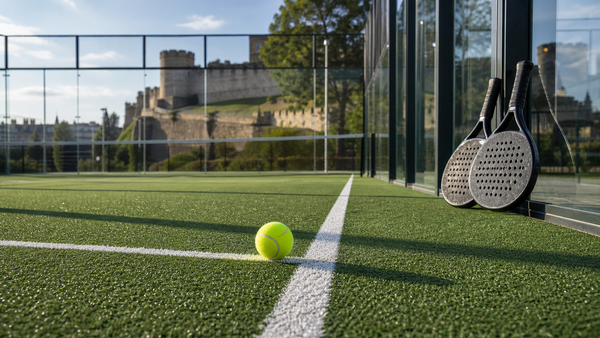
The biggest visible difference is the court. A padel court is smaller than a tennis court and is surrounded by glass and mesh walls. Those walls are not just decoration. They are part of the sport.
A tennis court is open, wider and longer, with clear boundary lines. Once the ball goes out, the point is over. In padel, the ball can bounce off the glass after landing in court, which keeps rallies alive and gives players more time to recover.
This is one reason padel feels more accessible. You do not need to cover as much ground as you do in tennis, and the walls often give you a second chance to stay in the rally.
2. Padel uses walls, tennis does not
In tennis, you hit the ball over the net and try to keep it inside the court lines. If it goes past the baseline or sideline, that is usually the end of the point.
In padel, the ball can hit the ground and then rebound off the glass wall. You can then play it back. This changes the entire feel of the game.
Instead of simply trying to hit through your opponent, padel rewards patience, angles, positioning and clever shot choice. Sometimes the best shot is not the hardest one. Often, it is the shot that makes the ball awkward after it hits the wall.
3. Padel is usually played as doubles
Tennis can be played as singles or doubles. Padel is overwhelmingly played as doubles.
That makes padel more social and less physically isolating than singles tennis. You are constantly working with a partner, covering zones, communicating and setting each other up.
This doubles format is a big part of padel’s appeal. It is competitive, but it also feels naturally social. For people who want a fun racket sport without the intensity of a full singles tennis match, padel is a strong fit.
4. The serve is underarm in padel
The serve is another major difference.
In tennis, the serve is usually one of the most powerful and technical shots in the game. Players serve overarm, often using pace, spin and placement to win cheap points.
In padel, the serve is underarm and hit after the ball bounces. It is much less dominant than a tennis serve. You still need good placement, but the serve is more about starting the rally than blasting your opponent off the court.
For beginners, this makes padel much friendlier. You can get a game going without needing months of serve practice first.
5. Padel rackets are completely different
A tennis racket has strings. A padel racket does not.
Padel rackets are solid, compact and perforated with holes. They are smaller than tennis rackets and have a shorter handle. This gives padel a very different hitting feel.
You do not get the same string-bed trampoline effect that you get in tennis. Instead, padel is more about control, touch and positioning. Power still matters, but raw power alone will not get you very far.
If you are just getting started, choosing the right racket matters. A beginner-friendly padel racket should feel comfortable, forgiving and easy to manoeuvre rather than overly powerful.
6. The ball looks similar, but does not play exactly the same
Padel balls look very similar to tennis balls. In fact, a new player may struggle to tell the difference at first.
However, padel balls are made for padel and generally feel slightly less lively than tennis balls. That helps create longer rallies and suits the smaller enclosed court.
You should use proper padel balls rather than simply grabbing any old tennis ball. It will make the bounce, pace and feel of the game more consistent.
7. The scoring is familiar
One thing tennis players will recognise quickly is the scoring.
Padel usually uses the same basic scoring system as tennis: 15, 30, 40 and game. Sets and match formats can vary depending on the venue, competition or social format, but the scoring language will feel familiar if you already know tennis.
That makes padel easy to understand. The rules around court use and walls are different, but the scoreboard is not a major learning curve.
8. Padel rallies are usually longer
Tennis can involve short points, especially when one player has a strong serve or powerful groundstrokes. Padel tends to produce longer rallies because the court is smaller, the serve is less dominant and the walls keep the ball alive.
This makes padel feel more tactical. You are often trying to build the point rather than finish it immediately.
Good padel players use lobs, volleys, angles and wall rebounds to move opponents around. It is less about hitting winners from the baseline and more about creating an opening.
9. Padel is easier to start, but still hard to master
This is probably the biggest reason padel has grown so quickly.
Most beginners can get a rally going fairly quickly. The court is smaller, the serve is simpler and the walls help keep the ball in play. That makes the first session more enjoyable than many people expect.
But do not mistake accessible for easy. As you improve, padel becomes deeply tactical. Positioning, communication, shot selection and wall judgement all become increasingly important.
The result is a sport that is beginner-friendly but still has plenty of depth. That is a strong combination.
Is padel easier than tennis?
For most beginners, yes, padel is easier to start than tennis.
You can serve more easily, rally sooner and enjoy a proper game without needing the same level of technical foundation. Tennis often takes longer to feel natural because the serve, groundstrokes and court coverage are more demanding.
That said, tennis players may have an advantage when moving into padel because they already understand racket control, spin, volleying and court positioning. They will still need to adjust to the walls, underarm serve and doubles-first tactics.
Is padel better than tennis?
Not better. Different.
Padel is probably better if you want a social, tactical, fast-learning racket sport that is enjoyable from the first few sessions. Tennis is probably better if you enjoy singles competition, bigger serves, open-court movement and a more traditional racket-sport challenge.
The good news is that you do not need to choose one forever. Plenty of players enjoy both.
Which sport gives you the better workout?
Both can give you a strong workout, but in different ways.
Tennis usually involves more running, more explosive changes of direction and more physically demanding singles play. Padel tends to be less punishing over a single session, but longer rallies and constant movement still make it a solid workout.
For many recreational players, padel feels easier on the body while still being active enough to feel worthwhile. That is part of its appeal.
Final thoughts
Padel and tennis share some DNA, but they are not the same sport.
Tennis is bigger, faster and more technically demanding from the start. Padel is smaller, more tactical, more social and easier for beginners to enjoy quickly. The enclosed court, glass walls, underarm serve and solid racket all change how the game is played.
If you already enjoy tennis, padel is well worth trying. If tennis has always felt a bit too technical or unforgiving, padel may be the racket sport that finally clicks.
Want to understand the game properly before stepping on court? Read our guide to padel courts, rules and layout, or check out our padel gear guide before your first match.
FAQs
Is padel the same as tennis?
No. Padel and tennis use similar scoring, but the court, walls, serve, rackets and tactics are different. Padel is played on a smaller enclosed court and uses the walls as part of the game.
Can you play padel with a tennis racket?
No. Padel uses a solid perforated racket with no strings. A tennis racket is not suitable for padel.
Do you serve overarm in padel?
No. In padel, the serve is underarm and hit after the ball bounces. This makes it much easier for beginners than a tennis serve.
Is padel mainly doubles?
Yes. Padel is usually played as doubles, which makes it a very social sport. Singles padel exists, but doubles is the standard format.
Is padel good for tennis players?
Yes. Tennis players often adapt well to padel because they already understand racket control, volleys and court movement. The biggest adjustment is learning how to use the walls and play more patiently.