Yes, a tennis player can absolutely play padel. In fact, tennis players often adapt quicker than complete beginners because they already understand racket control, volleys, movement and scoring.
But there is a catch. Tennis players who move into padel usually need to unlearn a few habits. Padel is not just tennis on a smaller court with glass walls. It has its own rhythm, tactics and shot choices.
Quick answer: tennis players can play padel and usually pick it up quickly, but they need to adjust their serve, swing length, use of power, court positioning and approach to the walls. The best tennis skills to bring into padel are volleys, reactions, footwork and ball control. The biggest mistake is trying to play padel like a tennis singles match.
Do tennis players have an advantage in padel?
Yes, tennis players usually start with several advantages when they try padel.
They are already used to tracking a ball, timing a shot, moving around a court and using a racket under pressure. They also understand familiar tennis-style scoring, which removes one of the first learning barriers.
A tennis player will often feel comfortable hitting volleys, controlling direction and reacting quickly at the net. Those skills matter a lot in padel.
However, the advantage only goes so far. Padel rewards different decisions. A tennis player who relies purely on power, topspin and baseline hitting can quickly find themselves losing to someone who understands walls, lobs and court position better.
Which tennis skills transfer well to padel?
Plenty of tennis skills transfer nicely into padel, especially at beginner and intermediate level.
Volleying
Volleying is one of the biggest advantages tennis players bring to padel. Padel is often won and lost around the net, so players who are comfortable volleying already have a useful head start.
The key adjustment is that padel volleys usually need more control and less finish. You are not always trying to punch a winner. Often, you are trying to keep opponents pinned back, create awkward rebounds and wait for a better chance.
Hand-eye coordination
Tennis players are used to reading speed, spin and bounce. That helps in padel, especially during quick exchanges close to the net.
The challenge comes when the ball hits the glass. The first few sessions can be humbling because the ball does not always come back where your tennis brain expects it to.
Footwork
Good tennis footwork helps with balance, recovery and shot preparation. Padel still needs sharp movement, even though the court is smaller.
The difference is that padel movement is more about positioning as a pair. You are not just covering your own side. You are constantly moving with your partner, closing gaps and keeping the court shape organised.
Racket control
Tennis players usually have good touch and directional control. That helps with lobs, controlled volleys, blocking fast shots and changing angle.
But padel uses a solid racket with no strings, so the feel is different. You do not get the same string-bed response as a tennis racket. The shot shape needs to be shorter and more compact.
What do tennis players struggle with in padel?
The biggest challenge is not physical. It is tactical.
Tennis players often arrive with habits that work brilliantly in tennis but cause problems in padel.
Using too much power
This is the classic one.
In tennis, hitting hard can win points outright. In padel, hitting hard often gives your opponent a helpful rebound off the back glass. That can turn your best-looking shot into their easiest return.
Padel rewards controlled pressure more than raw power. Placement, depth, patience and angle usually matter more than trying to blast the ball through someone.
Swinging too big
Tennis strokes are generally bigger than padel strokes. In padel, especially near the glass and at the net, shorter swings are usually better.
A big tennis backswing can make you late on the ball, especially during quick exchanges. Compact preparation helps you stay balanced and ready for the next shot.
Ignoring the walls
The walls are what make padel padel.
Tennis players often try to take every ball before it reaches the glass. Sometimes that is right. Often, it is not.
Learning when to let the ball hit the wall is one of the biggest padel adjustments. The glass can give you time, shape and a better hitting position if you use it properly.
Staying too deep
Tennis players are often comfortable from the baseline. In padel, the net is usually where you want to be when you can get there safely.
If you stay too deep all the time, you hand control of the point to your opponents. Good padel is often about winning the net, keeping it and forcing the other pair to defend.
Playing too individually
Padel is a doubles-first sport. That means your partnership matters.
A tennis player with strong singles habits may try to solve every point alone. In padel, you need to move with your partner, communicate clearly and understand who covers what.
The best padel pairs look connected. The worst ones look like two people who met by accident five minutes before the booking.
How should a tennis player adapt to padel?
If you are coming from tennis, the best approach is to keep your useful skills and soften the habits that do not fit.
- Shorten your swing: use compact shots, especially at the net and near the glass.
- Use less power: focus on control, depth and placement.
- Learn the walls: do not panic when the ball goes past you.
- Prioritise the net: work with your partner to move forward together.
- Use the lob: a good lob is one of the most important shots in padel.
- Communicate: call balls early and move as a pair.
The short version: stop trying to win every point with the first impressive shot. Padel often rewards the player who waits for the right moment.
Is padel easier for tennis players than complete beginners?
Usually, yes.
Tennis players start with useful racket skills, court awareness and confidence in rallies. They normally understand scoring quickly and feel comfortable competing straight away.
But complete beginners sometimes adapt to padel tactics faster because they are not fighting old habits. A tennis player may need to learn that less power can be more effective. That lesson is simple to say and strangely difficult to accept.
For a wider comparison, read our guide to whether padel is easier to play than tennis.
Can a tennis player use a tennis racket for padel?
No. You need a padel racket to play padel properly.
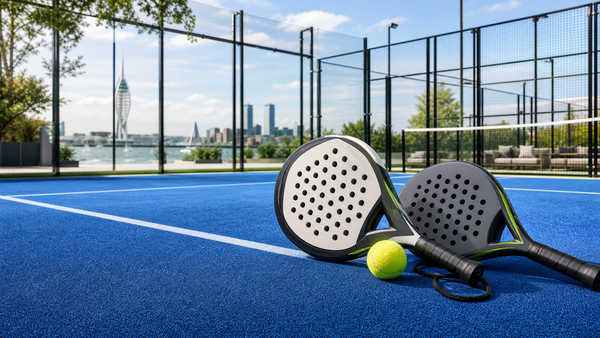
A tennis racket has strings and a longer frame. A padel racket is solid, shorter and perforated with holes. It is designed for the smaller court, faster reactions and different ball feel.
Most venues let you hire a padel racket for your first game, which is sensible. Once you know you enjoy it, you can look at buying your own.
If you are choosing your first racket, our padel gear guide explains what beginners should look for.
Can a tennis player play padel well straight away?
A decent tennis player can usually play a passable game of padel quickly. They will probably make good contact, volley well and understand the basic flow of points.
But playing padel well takes more than tennis ability.
The best early signs are not huge winners. They are better decisions: letting the ball come off the glass, choosing the lob, moving forward with your partner and keeping opponents under pressure without overhitting.
Tennis gives you a head start. Padel still makes you earn it.
What tennis habits should you leave behind?
| Tennis habit | Padel adjustment |
|---|---|
| Big groundstroke swings | Use shorter, more compact shots |
| Trying to hit through opponents | Use placement, patience and angles |
| Staying comfortable at the baseline | Move forward and fight for the net |
| Taking every ball before it passes you | Learn when to use the glass |
| Playing as an individual | Move and communicate as a pair |
Is padel good for tennis players?
Yes, padel can be excellent for tennis players.
It improves reactions, volleys, touch, anticipation and doubles awareness. It also gives tennis players a more social, tactical game that is easier to play casually with mixed ability groups.
There is a small risk that playing a lot of padel changes your timing or swing habits if you are also playing serious tennis. But for most recreational players, that is not a major concern. The sports can sit nicely alongside each other.
Final thoughts
A tennis player can play padel, and will often pick it up quickly. The existing racket skills, volleys, reactions and court sense all help.
The key is not to treat padel like tennis with walls. Use less power, shorten the swing, learn the glass and work with your partner. Once that clicks, tennis players often become very handy padel players.
So yes, bring your tennis skills. Just leave the massive backswing and “I’ll just hit harder” plan at the gate.
New to the sport? Start with what padel is and why it is so popular, then read how padel is different from tennis for the full comparison.
FAQs
Can tennis players play padel?
Yes. Tennis players can usually play padel and often learn quickly because they already have racket control, volleys, movement and scoring knowledge.
Is padel easy for tennis players?
Padel is usually easier for tennis players than for complete beginners, but tennis players still need to adapt to the walls, shorter swings and doubles tactics.
What is the hardest thing for tennis players in padel?
The hardest adjustment is usually using the walls and reducing power. Tennis players often try to hit through opponents, while padel rewards placement, patience and positioning.
Can you use a tennis racket for padel?
No. Padel uses a solid perforated racket with no strings. A tennis racket is not suitable for padel.
Does playing padel help tennis?
Padel can help tennis players improve reactions, volleys and doubles awareness. However, serious tennis players should still practise tennis-specific technique and serve mechanics separately.