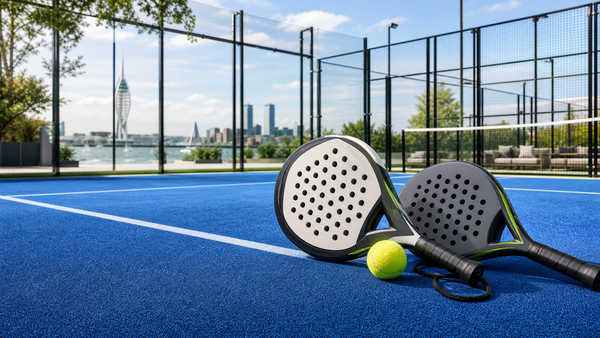
No, you should not hit the ball hard most of the time in padel. Power is useful in the right situation, but control, placement, patience and court position win more beginner points. From the back of the court, a hard shot often rebounds off the glass and comes back with interest.
Last updated: 24 June 2026. This guide was checked against current LTA beginner skills guidance and official FIP rules.
Why power can work against you
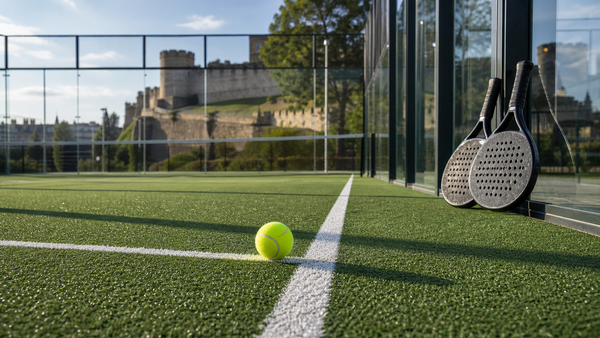
Padel is played on an enclosed court. The ball can rebound from the glass after it has bounced, so a hard shot does not always finish the point. Sometimes it gives your opponents a quicker, easier rebound.
That is why padel rewards control before power. A slower ball placed low at the feet can be harder to return than a fast ball hit comfortably at waist height.
When should you hit hard?
Use power when the court position supports it. That usually means you are balanced, close enough to attack and receiving a ball that sits up.
- High, short ball: a genuine chance to attack.
- Balanced body position: power without balance is just a faster mistake.
- Close to the net: opponents have less time to react.
- Open middle: a firm ball between players can cause hesitation.
- Weak return: finish when the previous shot has earned it.
The key phrase is earned it. Hitting hard because you are annoyed is a strategy, but not a good one.
When should you avoid hitting hard?
Avoid forcing power when you are deep, late, off balance or defending. From the back court, your first job is often to reset the rally, use the wall and create a chance to move forward.
A rushed hard shot from behind the service line usually produces one of three things: the net, the glass or a counterattack. None of them will make you feel wiser.
Control beats power for beginners
The LTA's beginner skills guidance highlights the value of controlled shots such as lobs, slower play and using the back glass when defending. That is the beginner lesson in one sentence: give yourself time and make the opponent play a difficult next ball.
Use a compact swing, aim for clean contact and keep the ball lower when opponents are near the net. Once you can place the ball reliably, add pace in small doses.
Better targets than just hard
- At the feet: awkward for opponents near the net.
- Through the middle: reduces angles and can create confusion.
- Into the corners: controlled depth can create difficult rebounds.
- Behind a moving player: changing direction often beats extra speed.
- High lob: pushes opponents away from the net and gives your team time.
How hard should you serve?
The padel serve should prioritise legality, placement and low bounce rather than maximum pace. FIP rules require an underarm serve after a bounce, played diagonally. A controlled serve that makes the return awkward is usually better than a fast serve that sits up nicely.
If you are still learning the rules, read padel rules explained.
How hard should you volley?
Most volleys should be firm and controlled. You are trying to keep opponents under pressure, not remove the felt from the ball. Aim low, deep or into space, then move with your partner.
Trying to finish every volley usually creates errors. Build pressure first. Finish when the easy ball arrives.
What about smashes?
Smashes are where power matters most, but shot choice still comes first. A short lob near the net can be attacked. A deep lob may need a controlled overhead, bandeja-style shot or reset to keep position.
If you smash the wrong ball, the glass may hand your opponents another chance. Very rude of it, but entirely legal.
A simple power checklist
- Am I balanced?
- Am I in an attacking position?
- Will this shot make the next ball harder for my opponents?
If the answer is no, reduce the pace and choose a better target.
Kit note for beginners
A racket will not solve shot selection. If you are new, choose control and comfort from our padel rackets before buying for power. If the handle is slipping, try racket overgrips first. Cheaper and usually less dramatic.
For broader beginner setup, use the padel gear guide. You can also join the Darts Connect email list through the home page sign-up form for beginner padel tips.
FAQs
Should beginners hit hard in padel?
No. Beginners should focus on clean contact, compact swings and placement. Power can be added once control becomes consistent.
Is power important in padel?
Power is useful for finishing points and attacking weak balls, but it is less important than control, positioning and shot selection.
Why do hard shots come back in padel?
The glass walls keep the ball in play after a legal bounce. A hard shot can rebound and give opponents an easier return.
Where should I aim in padel?
Aim low at the feet, through the middle, into corners, behind moving opponents or use a lob. Placement usually creates more pressure than raw speed.
Should I smash every high ball?
No. Short high balls can be attacked, but deeper lobs often need a controlled overhead to maintain net position.
Sources and further reading
- LTA: Padel tips for beginners
- LTA: Official padel rules and scoring explained
- International Padel Federation: Rules of Padel
Sources checked 24 June 2026.