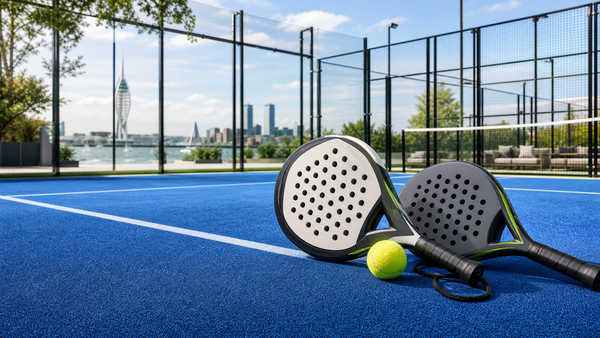
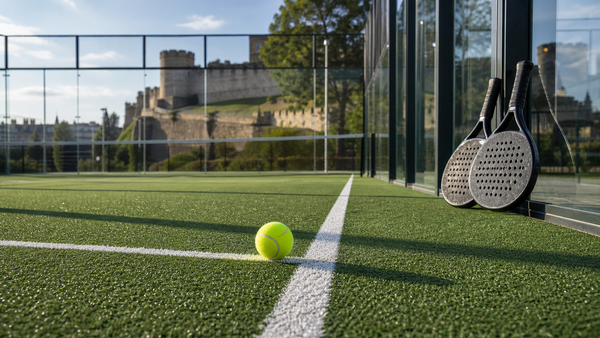
Yes, padel balls and tennis balls are different, even though they look almost identical. The difference is not the colour or the fluff. It is mainly the approved specification and playing feel: padel balls are made for a smaller enclosed court, while tennis balls are made for a larger court and a faster game.
Last checked: 24 June 2026 against the International Padel Federation rules and ITF tennis ball approval guidance.
Quick answer
Padel balls and tennis balls are close in size and weight, but they are not interchangeable for proper play. The official padel ball range is slightly smaller at the lower end, and padel rules specify internal pressure as well as bounce. Tennis balls are tested under ITF ball approval procedures for tennis conditions.
For a casual knockabout, either ball will usually bounce and rally. For a proper session, match the ball to the sport. Dull advice, annoyingly correct.
Padel balls vs tennis balls at a glance
| Feature | Padel ball | Tennis ball |
|---|---|---|
| Official size range | 6.35cm to 6.77cm diameter under FIP rules | Usually 6.54cm to 6.86cm for a standard approved tennis ball |
| Weight | 56.0g to 59.4g | 56.0g to 59.4g |
| Bounce test | 135cm to 145cm when dropped from 2.54m | Standard tennis ball rebound is tested separately under ITF approval rules |
| Playing feel | Often slightly slower and easier to control | Usually livelier through a full tennis court |
| Best use | Padel | Tennis |
Why the difference matters
Padel is played on a 20m by 10m enclosed court where the glass is part of the rally. A livelier ball can make rebounds sharper, speed the game up and reduce control for beginners. Tennis has more open court space and rewards a different bounce and pace.
That is why the balls can look the same in your bag but feel different after 10 minutes on court. The difference is small enough to miss in the shop and big enough to matter when you start timing volleys, lobs and rebounds.
Can you use tennis balls for padel?
You can hit with a tennis ball on a padel court, but it is not the right choice for padel. It can feel too lively off the glass and make rallies less controlled. If you are booking a padel court, take padel balls.
If you are still sorting the rest of your kit, start with our padel rackets and padel accessories ranges, then keep the rest simple until you know how often you will play.
Can you use padel balls for tennis?
For a casual hit, yes. For proper tennis, use tennis balls. Padel balls are close enough for a relaxed rally, but they will not give you the same response for serves, baseline hitting or match practice.
We cover that crossover in more detail in Can I Play Tennis With Padel Balls?.
What should beginners buy?
- If you are playing padel: buy padel balls.
- If you are playing tennis: buy tennis balls.
- If you play both: keep separate tubes in your bag.
- If you are borrowing kit: ask the venue what ball they use for beginner sessions.
Do not overthink it. The right ball is one of the cheapest ways to make the sport feel as it should.
Common mistake
The common mistake is assuming all yellow felt balls are basically the same. They are close relatives, not twins. Using the wrong one once is not a disaster. Building your timing around the wrong one is where it gets irritating.
FAQs
Are padel balls smaller than tennis balls?
The official ranges overlap, but the FIP padel range starts slightly smaller than the standard tennis-ball range used in ITF approval guidance.
Are padel balls lighter than tennis balls?
No. The official weight range is the same at 56.0g to 59.4g.
Do padel balls bounce less?
They are generally designed for a slightly less lively padel feel, although exact bounce depends on the ball, age, pressure and conditions.
Can I use tennis balls for one padel session?
You can hit with them, but it is not recommended. Proper padel balls make rebounds, lobs and control feel more natural.
Do padel balls damage tennis rackets?
Normal casual use should not damage a tennis racket. The issue is playing feel and suitability, not sudden racket failure.